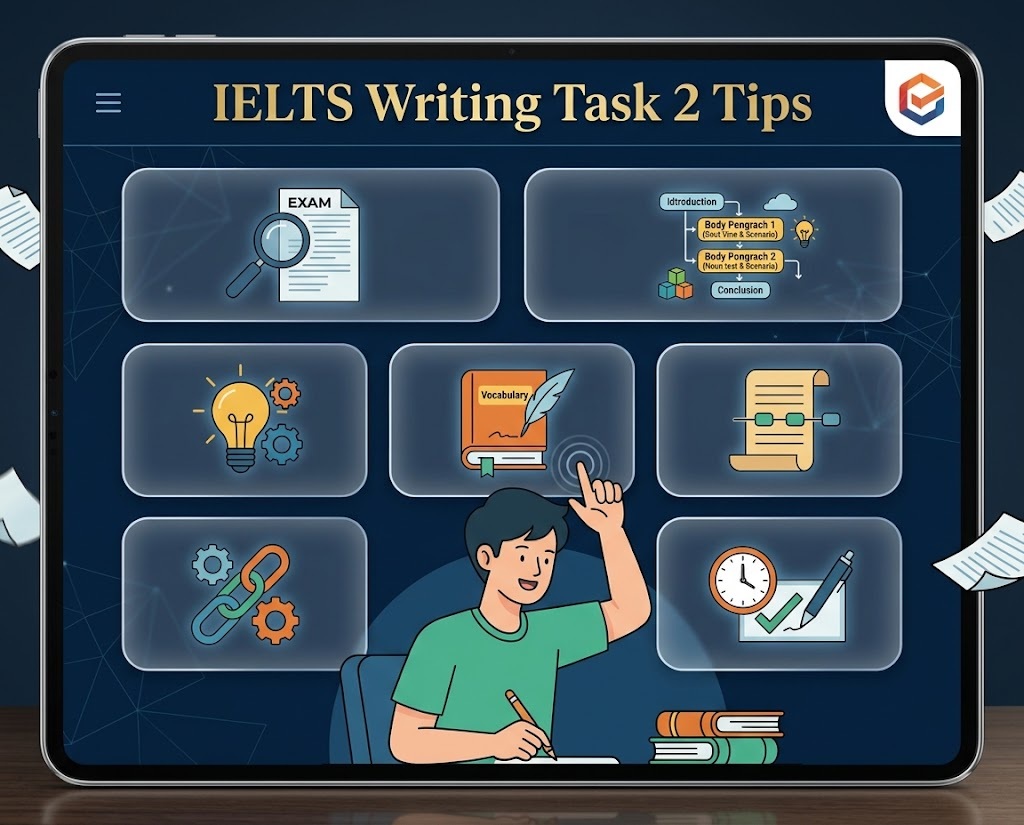
The Master Principle: The Unbroken Causal Chain & Academic Hedging

The definitive dividing line between Band 6.5 and Band 8.5+ is not advanced vocabulary or complex sentence volume; it is causal depth and epistemic caution (hedging). Band 6.5 candidates produce “leaps of logic”—they state a cause and jump directly to an extreme end-result without proving the intermediate steps. Furthermore, they express claims in absolute terms […]

The Master Principle: The Unbroken Causal Chain & Academic Hedging Read More »
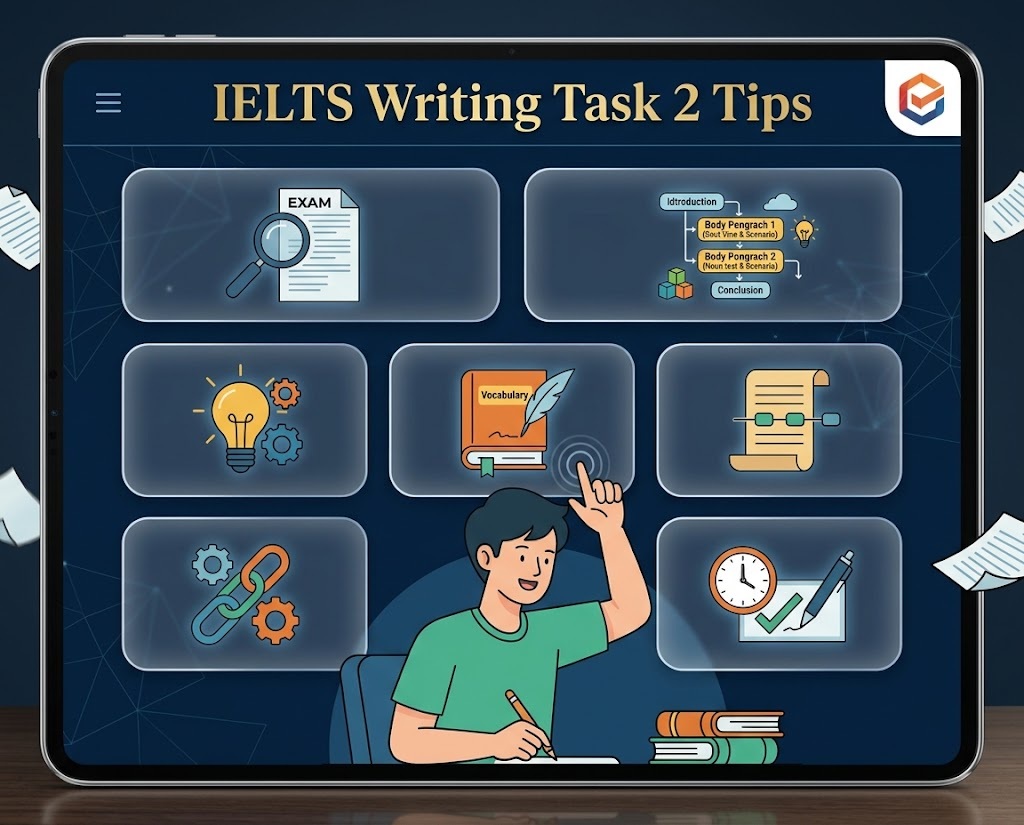
The Rapid 2-Sentence Conclusion & The 3-Minute Error-Hunting Audit

Leaving out a conclusion or running out of time mid-sentence caps Task Achievement at Band 5, as the response lacks a clear ending. Conversely, spending ten minutes writing a rambling final paragraph often introduces unvetted errors. A conclusion requires no new information; it serves only to synthesize your core claims and cement your position. The

The Rapid 2-Sentence Conclusion & The 3-Minute Error-Hunting Audit Read More »

Grammatical Range & Accuracy (High-Yield Complex Sentence Formulas)

Examiners evaluate two distinct metrics in Grammar: Range (variety of syntactic patterns) and Accuracy (frequency of error-free sentences). To score Band 7 or higher, you must produce “frequent error-free sentences” alongside a flexible mix of simple and complex structures. Writing only short simple sentences limits you to Band 5; writing overly long, tangled sentences riddled

Grammatical Range & Accuracy (High-Yield Complex Sentence Formulas) Read More »

Target Natural Collocations Over “Thesaurus Words” (Lexical Resource)

Examiners penalize candidates who force obscure vocabulary into essays without understanding their natural usage. The official Band 7 and Band 8 descriptors do not reward archaic vocabulary; they require “less common lexical items with awareness of style and collocation” and “very natural and sophisticated control.” The “Thesaurus Trap” vs. High-Precision Collocations Using rare dictionary words

Target Natural Collocations Over “Thesaurus Words” (Lexical Resource) Read More »

Tip 4: Master Inconspicuous Cohesion (Stop the “Linker Overdose”)

Examiners penalize essays where every sentence begins with a formulaic transition word (“Furthermore,” “Moreover,” “In addition,” “On the other hand”). Official Band descriptors explicitly state: The Three Tiers of Cohesive Devices Method Mechanics Example Band Level Mechanical Linkers Starting clauses with generic list connectors. Furthermore, cars produce pollution. Moreover, traffic is bad. 5.5 – 6.5

Tip 4: Master Inconspicuous Cohesion (Stop the “Linker Overdose”) Read More »

Master the Lean 2-Sentence Introduction (Under 5 Minutes)

An introduction carries no extra points for length or literary flair. Its only scoring objectives are to establish the context by paraphrasing the prompt and present a clear thesis statement. Spending more than five minutes or writing more than 40–50 words here eats into the time required to build and proofread your body paragraphs. Examiners

Master the Lean 2-Sentence Introduction (Under 5 Minutes) Read More »

Build Fully Developed Body Paragraphs Using the PEEL Framework

A frequent mistake in IELTS essays is “idea listing”—cramming three or four separate points into a single paragraph without explaining any of them. The official Band 7 descriptor for Task Achievement requires you to present, extend, and support main ideas, while Coherence and Cohesion requires a clear central topic within each paragraph. The most reliable

Build Fully Developed Body Paragraphs Using the PEEL Framework Read More »

Dissect the Prompt and Lock Down Your Position (Minutes 0–5)

The most common reason high-level English users score Band 6 or 6.5 in Task Achievement is answering what they think the prompt is asking rather than what is actually on the page. Task Achievement accounts for 25% of your total score, and misinterpreting or partially answering the prompt immediately caps this criterion at Band 5

Dissect the Prompt and Lock Down Your Position (Minutes 0–5) Read More »

IELTS Speaking Tips – Avoid Overusing Fillers

The post “🛑 Avoid Overusing Fillers” emphasizes the importance of clear and concise communication in writing. It highlights how excessive filler words can dilute the message, leading to disengaged readers. The article offers practical tips for identifying and reducing filler usage, ultimately enhancing the clarity and impact of one’s writing. Key advantages include improved reader retention, stronger message delivery, and overall better writing quality. By focusing on succinctness, writers can make their work more engaging and effective, setting themselves apart in a saturated content landscape.

IELTS Speaking Tips – Avoid Overusing Fillers Read More »

IELTS Speaking Tips – Use Fillers Naturally (If Required)

🎙️ “Well… actually, using fillers the right way can make you sound more fluent and confident!” 💡 What Are Fillers? Fillers are small words or phrases that help you: They aren’t bad—native speakers use them all the time! 📚 Common IELTS-Safe Fillers Filler Usage Well… Starting a thoughtful response Actually… Clarifying or expressing contrast Let

IELTS Speaking Tips – Use Fillers Naturally (If Required) Read More »